What Moved Under Her Husband's Skin
Content note: Illness and the death of a loved one.
The big house was the only one on the island with a second storey, coral stone under a tin roof at the end of a sand lane, and the children said a jinni lived upstairs.
Aminath was married into it on a hot afternoon in the dry season. She sat in the women's room with Mama and her aunts while the men did the nikah on the other side of a curtain. When the qadi's man came to the curtain to ask her consent, she said yes, mostly because of the two dhonis Bapa had lost in last year's storm. All she had of her husband was a deep, careful voice saying his name, Ibrahim, and a shape through the cloth taller than any man in the room. Mama kept her eyes on her lap the whole time.
That night she sat on the edge of the bed in the downstairs room of his house and waited. The lamp was lit. Her small hand mirror from home was on the shelf beside a plate of hedhikaa nobody had touched, and under the lamp oil there was a faint sour smell she couldn't place. She was seventeen and had eaten nothing since morning.
He knocked twice and came in with his head bent under the door frame.
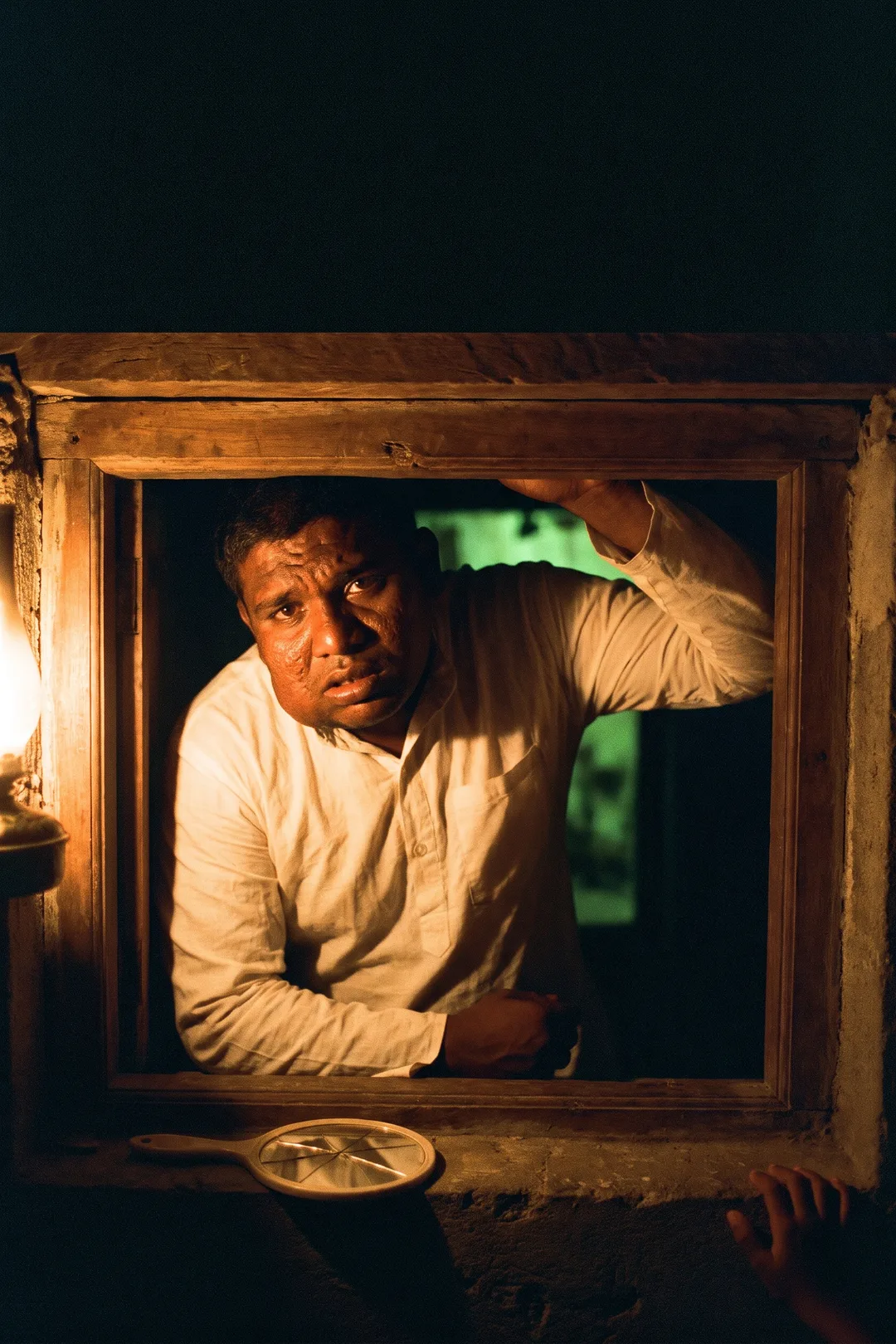
He was broad in a clean white kurta, his hands holding each other in front of him, and his face was knotted and ridged, dark in the folds, the lips pulled apart so they didn't meet over his teeth. Under the skin something moved. It shifted when he breathed in and settled when he breathed out.
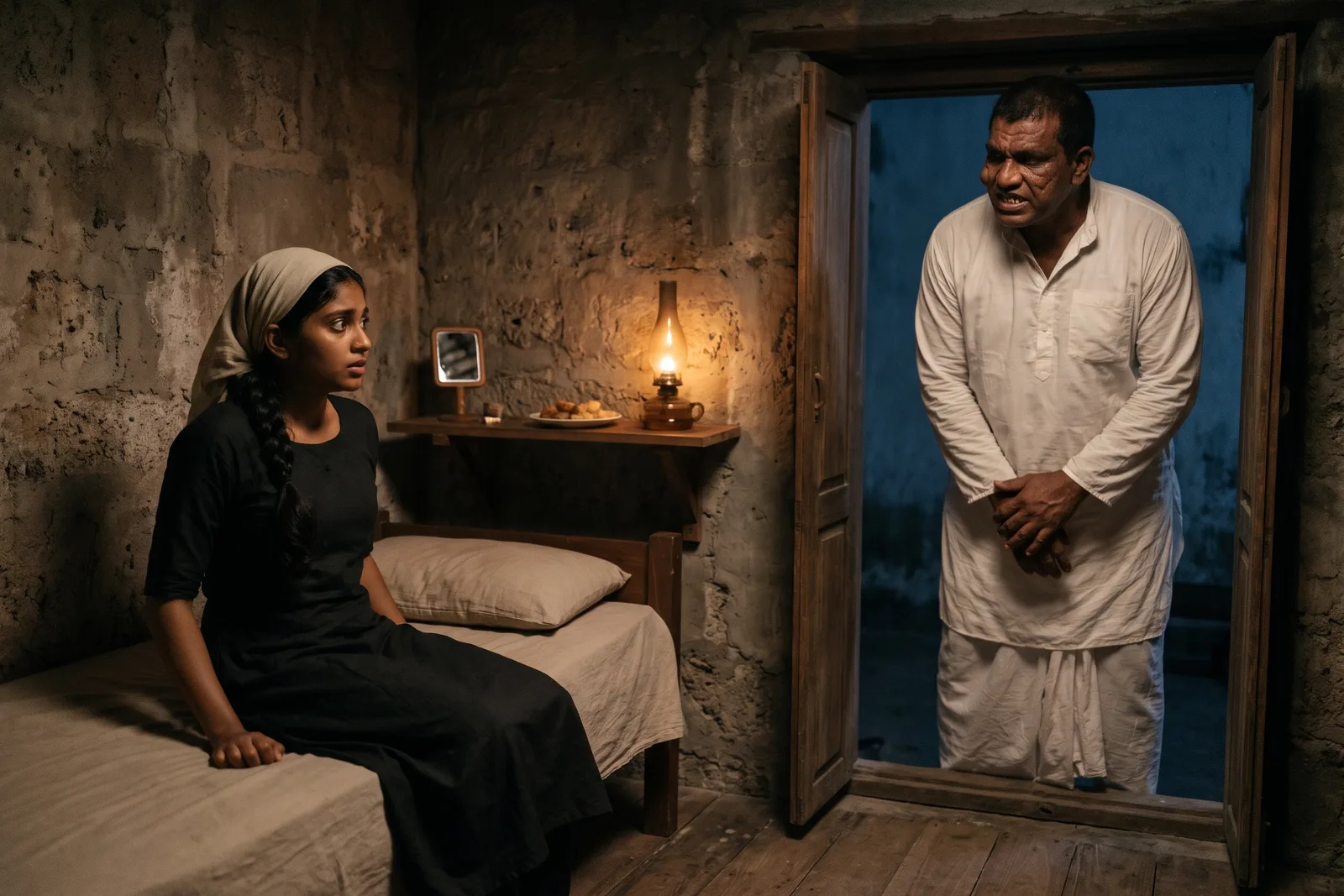
She screamed and backed into the wall so hard the mirror fell off the shelf.
He stepped back at once, into the doorway. "I'm sorry. I'm sorry. Your father said you knew." He spoke slowly, as if the words cost his mouth something. "This is your room. Mine is upstairs, right over this one. Nobody will come in here."
"I want to go home."
"In the morning. It's too dark now. Fathimath will take you in the morning."
He closed the door and went up the stairs one heavy step at a time. She sat on the floor with her back to the wall and didn't sleep, and when she picked up the mirror at dawn there was a crack across one corner.
Fathimath, his maid, walked her home through the sand lanes at first light. She had sent the boatman's boy running ahead before dawn, so Bapa was already waiting on the joali by the front door, still in his prayer cap, and when she came through the gate he looked down at his feet.
"I told him you knew," he said. "I was afraid you'd refuse if you saw him first, so I told your mother to say nothing. That was my doing, not hers." Mama was crying in the kitchen doorway. "But he is a good man. Give him a month. If you still want to leave after that, I'll go to the qadi myself."
She said she would. On the walk back she couldn't stop being angry with them, and she was ashamed of it, and that only made her angrier.
There weren't many people in that house and the rooms were close together, so she noticed things without meaning to. The old cook scolded him for not eating and he let her. The cats wound round his ankles while he worked at his ledgers at the desk in the downstairs front room. Islanders came to the door in the afternoons, a widow for rice, a man wanting a loan for nets, and went away with both. Sweets appeared on her step wrapped in a banana leaf, then a book, because Bapa had told him she liked stories.
At night his voice came down through the boards over her bed, reciting Quran, low. Once, very late, there was another sound under his breathing, wet and slow, like someone chewing with their mouth closed. She pulled the sheet over her head.
"My Maama nursed his mother," Fathimath said one morning, plaiting Aminath's hair on the step. Ibrahim's father had married a fisherman's daughter, and his family wouldn't have it, so while she was carrying the baby they paid a fanditha meehaa on another island. "Maama said he wrote something on paper and read over it all night, and they folded it in black thread and buried it under her doorstep. To eat the baby. Only the baby didn't die, so it stayed." The boy was born with that face, and his mother died before the year was out.
"An old hakeem came over from Malé on the trading dhoni when he was small. He held the boy's wrist a long time and counted out his years on his fingers, but Maama never told me the number. He said, 'On the day it lets go of his face, it will be done with him.'"
"Done with him how?" Aminath said.
"Maama always said it meant he'd be free." Fathimath pulled the plait tight. "Insha'Allah."
Aminath had grown up on her own Maama's stories, and in those a curse never let go of anyone for nothing. She decided Fathimath's Maama was right, because she wanted her to be.
She began sitting with him in the evenings, reading aloud from his books, badly, tripping on the long words, while he corrected her from the desk without looking up. One of the books was about a sailor who left his wife on an island and went after a treasure for nineteen years.
"He should have stayed home," she said on the third night, shutting it.
"Then there's no book."
"Then she gets a husband instead of a book."
He laughed, a wet sound through his teeth, and put a hand over his mouth. "She waited for him, though. She could have married someone else. Doesn't that mean she thought he was worth it?"
"It means nobody asked her."
He looked up from the ledger then, and for a moment she thought she'd offended him. "No," he said. "I don't suppose anybody did." After that he stopped correcting her on the easy words and argued with her about the endings instead, and some nights they went on so long that Fathimath came in twice to trim the lamp.
Another evening she leaned over the desk to point at a word, and the lump under his cheek slid across his face toward her, slow as a fish turning under still water, and stayed pressed against the skin nearest her until she sat back. He put his hand over it. "It does that," he said. "Sorry."
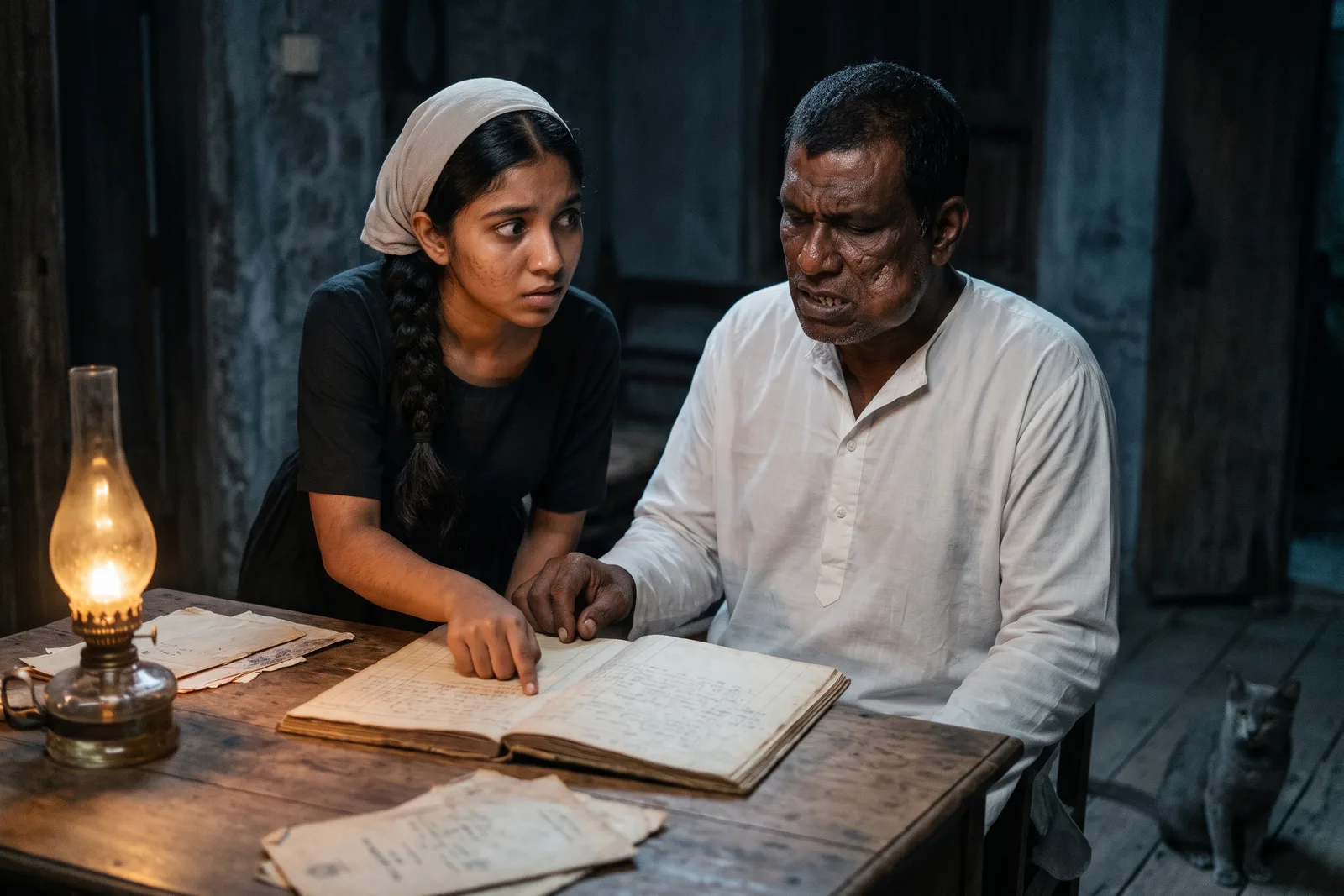
She didn't go on reading. "Does it hurt?"
"At night, mostly." He kept his hand where it was. "Your father told me you knew everything. My face, and what the hakeem said, and how long. He said you'd heard all of it and still said yes." He waited. "You didn't, did you."
"How long?"
"He said I wouldn't see twenty-four. I'll be twenty-four after Ramadan."
That was four months away. She sat with the book open on her knees and couldn't find the line she'd been reading.
"I should have asked you myself," he said. "I knew your father had lost his boats. I let him answer for you because I wanted the answer to be yes." He didn't say sorry this time, and she was glad, because she wouldn't have known what to say back.
A week later, at supper, he asked her to pass the fish and said her name across the mat, and the m came out clean. His lips had closed over his teeth. He didn't seem to notice. She did, and the rice went cold in her hand.
After that she kept catching herself looking. One cheek went smooth, then the ridge over his eye. The thing under his skin moved slower, and some nights she couldn't see it move at all. She told herself the curse was leaving him, and that a curse which left might take the hakeem's years away with it. On her prayer mat she asked God to let it be that, and then lay awake with Maama's stories going round in her head.
He caught her at it one evening, leaning in with the lamp to look at the corner of his mouth.
"What is it?" He put his fingers to his face, feeling along the jaw. "What's changed?"
"Nothing. It's better."
"Better how?" His hand stayed on his cheek, and for the first time since the wedding night he looked frightened. "Don't look at me the way the hakeem did. Please."
After that she read with her eyes on the page and looked at him only when he was turned away. He was getting thinner. His kurta hung off his shoulders, and he climbed the stairs with a hand flat on the wall.
On the last evening of the month Bapa had asked her for, he asked, still looking at his ledger, whether Fathimath should pack her things for the morning.
"No," she said, before she'd thought. That night she sent the boatman's boy across the island to tell Bapa she was staying.
Four days later the cats sat on the top step outside his door and wouldn't come down for their fish. Ibrahim coughed at the desk into a cloth, and it came away dark and wet.
She stopped telling herself anything. It would let go of his face when it was done with him, and it was nearly done.
She went up the stairs for the first time. He was lying on his mat by the window, and when she sat down he didn't pretend. "It's quicker than he said," he told her. "I thought I'd have Ramadan."
She put the lamp on the floor between them, and the cats came in and lay along his legs.
It went on all night. Around midnight the skin along his jaw went slack and creased, then lay flat, like the skin on boiled milk settling. The lump under his cheek moved once more, toward her, and then didn't. Some time after that the sour smell went, and there was only sweat and lamp oil. She held his hand. It was hot, and then it was cooler. She wanted to look away, and didn't.
Under all of it was a young man's face. His nose was a little crooked. There was a small white scar on his chin.
"Is it gone?" he said.
She nodded. She couldn't speak.
"Can I have your mirror?"
She went down the dark stairs, found it on the shelf, and came back up and held it for him with the crack across its corner. He turned his head a little one way, then the other.
"My nose is crooked," he said. Then: "You can go home now. You don't have to stay for this."
"No."
He shut his eyes. She held the mirror until her arm shook, then put it down and took his hand in both of hers. Across the island the call to Fajr began, thin over the flat sea, and before it reached the end his hand went slack in hers.
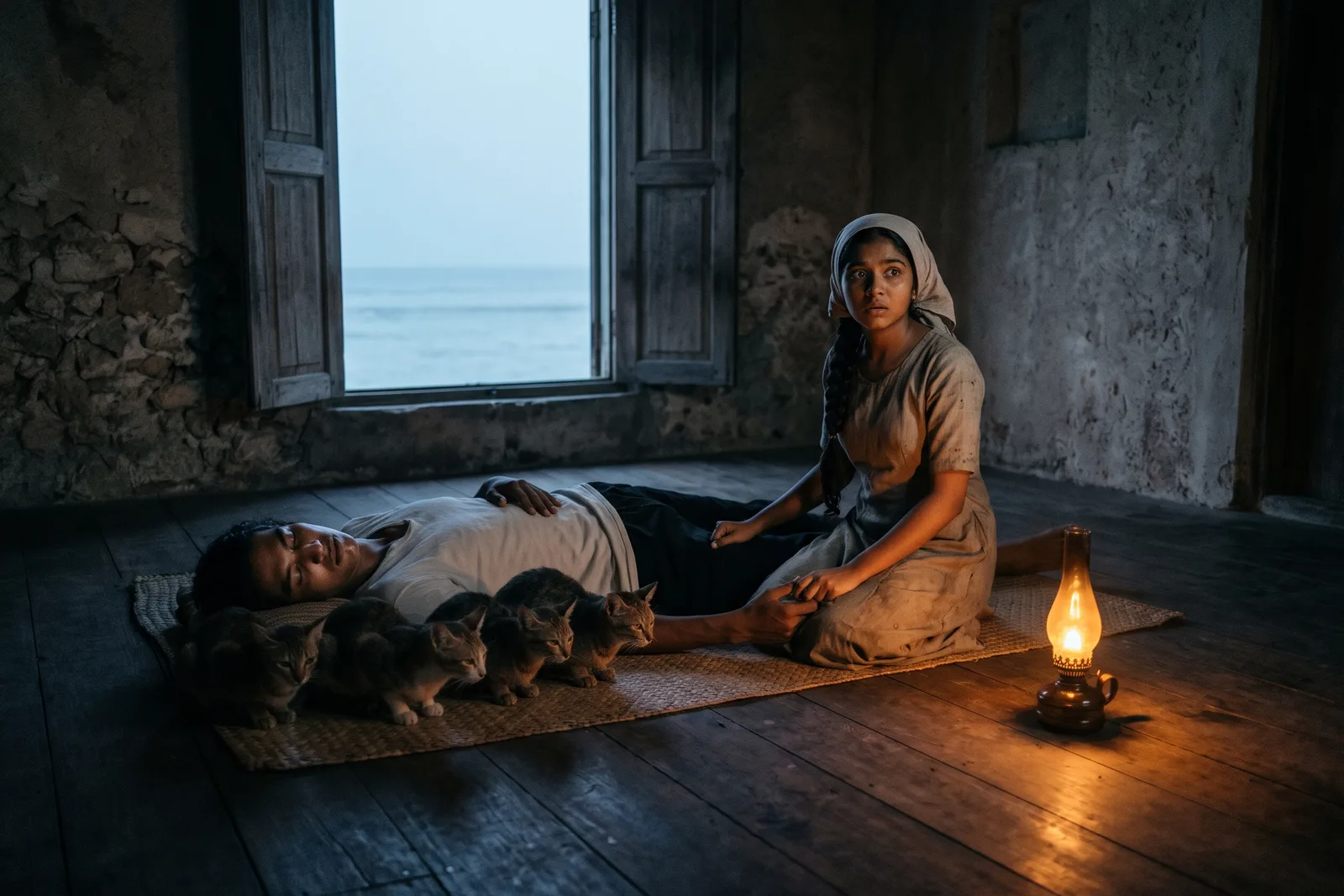
The cats got off his legs all at once and backed into the corner. In the quiet after the adhan, from under the floorboards, came the wet, slow sound she had heard through the boards that night, like someone chewing with its mouth closed. It moved along under the floor toward the stairs, and down them, and she never heard it again. It had finished with him, and it was leaving. In the morning there was a damp track across the sand of the vaa, going out under the gate.
When the sound was gone she went to the top of the stairs and called down for Fathimath, and Fathimath ran for Bapa. He came up before the women washed him, looked at the face for a long time, the crooked nose, the scar, and then sat down on the floor and put his hands over his own face.
They buried him that afternoon. She didn't go home. She stayed downstairs and never climbed the stairs again, because she couldn't stand on the boards that thing had lived under. In the afternoons she gave out the rice at the door herself. When Bapa came to visit she made him tea and sat across from him while he drank it and said nothing, and after a while he stopped trying.
In the evenings she still took his books down and read aloud at the desk, tripping on the long words, and every time she tripped she stopped and waited a moment before she went on.
Should this become an Enigma video?
0 votes
Comments
Be kind. An editor checks every comment before it appears.
No comments yet. Be the first.