The Tree Under the Sea Was a Lie
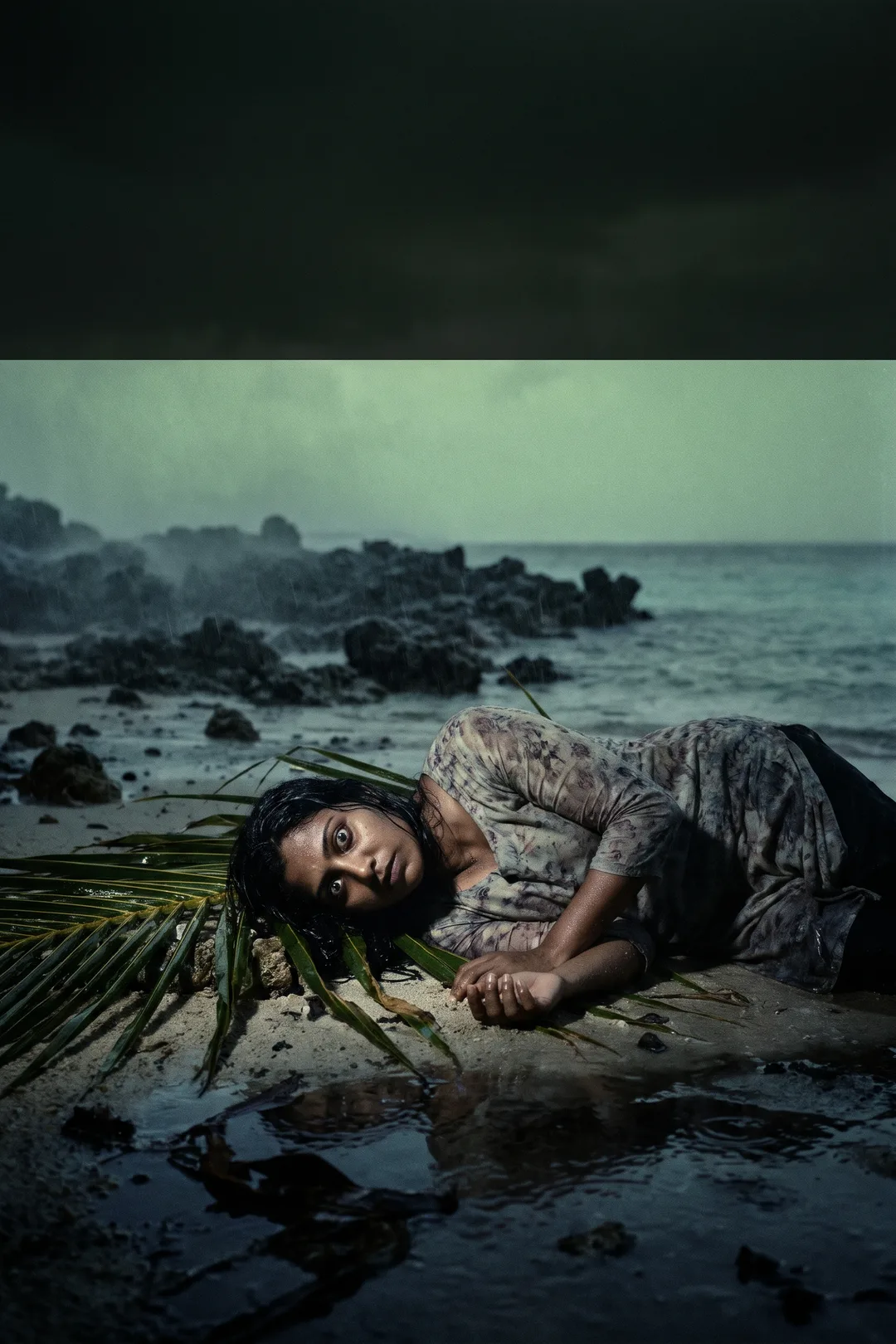
On the islands of the Maldives, the king's rule was simple. A giant double nut found on a beach or floating in a lagoon belonged to him. People who kept one or sold one were reportedly punished, by some accounts with death, and the historian Guy Lionnet records that a thief might lose a hand. Nobody now knows which king first made the rule, or how often it was carried out.
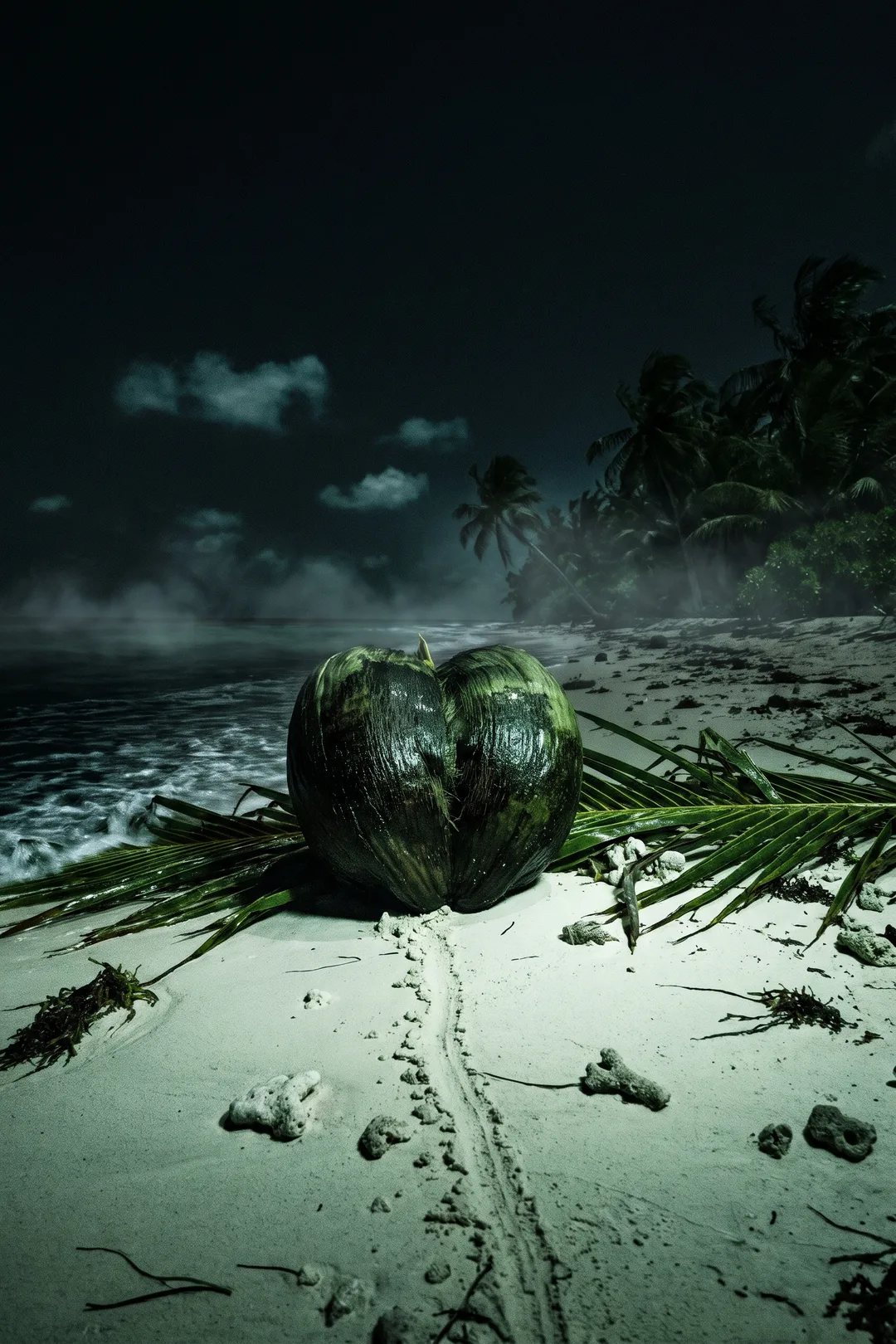
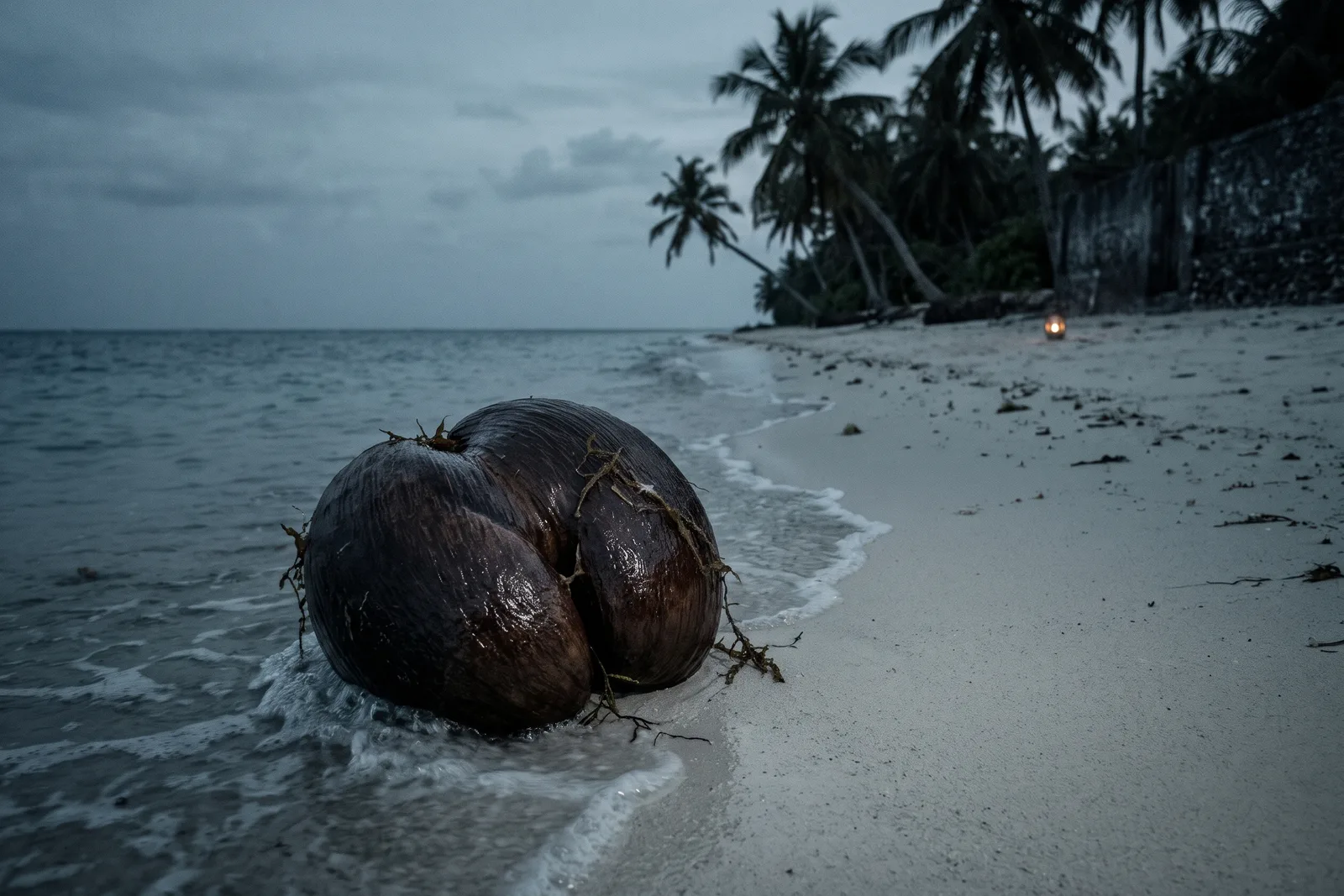
The nut it protected was unlike anything else the sea brought in. It was a dark, hard seed far bigger than any coconut, split into two rounded lobes so that it looked like a heart, and so heavy it took both arms to lift. On islands where people knew every palm, no tree grew anything like it, and a nut that reached a buyer could fetch a fortune.
François Pyrard de Laval, a French sailor who spent years in the Maldives in the early 1600s after his ship was wrecked there, wrote about what the rule meant in practice. The king's officers searched people they suspected of hiding one. And because the charge was so serious, an accusation could be used maliciously, against someone an accuser wanted to harm.
Sailors had an answer for where the nuts came from. Seamen's stories, as Oxford University's Cabinet project tells it, spoke of a tree growing on the sea floor, and of nuts "falling upwards" from it, rising out of deep water to the surface. The name stuck: coco de mer, the coconut of the sea.
In Europe, people paid a great deal. The nut was believed to be a stronger remedy than bezoar, the stone from an animal's stomach that doctors used against poison, and some nuts were said to be set in gold. In Prague, the Holy Roman Emperor Rudolf II, who filled his rooms with rare and strange objects, was said to have paid 4,000 gold florins for one, and the Cabinet project describes a ewer, a tall pouring jug, made from one of the nuts for his court in 1602. For more than a century and a half after that, nobody in Europe knew where the tree grew.
In 1768 a French expedition under Marion Dufresne reached the Seychelles, a group of islands in the Indian Ocean about 2,000 km from the Maldives, then uninhabited. A surveyor named Barré was put ashore on the island now called Praslin to map it.
According to the Abbé Rochon's account, which Guy Lionnet reproduced, Barré found one of the nuts lying near the shore. He knew what it was and what it was worth in Europe, and he hid it before going any further. Then he walked inland into the forest. Tall palms stood there with huge fan-shaped leaves, and the double nuts hung from them in clusters, with more lying under the trees. There were so many that Barré began to doubt they could really be the precious coco de mer at all. He gathered about thirty and took them with him. The expedition took them to Île de France, now Mauritius, where Pierre Poivre, the French intendant, confirmed that they were.
The tree had never been under the sea. It grew on dry land, on Praslin and a few small islands near it, and nowhere else in the world.
The price did not survive the discovery for long. In 1769 Duchemin, Dufresne's second-in-command, loaded a large quantity of nuts from Praslin and shipped them to market. He reportedly brought so many that he flooded the market. What had been rare enough for an emperor was suddenly being unloaded by the shipful, and the price collapsed.
The discovery also explained why the nuts that reached the Maldives never grew there: they were dead. A fresh, living coco de mer, the largest seed of any plant, is so dense that it sinks. Dropped in the sea, it goes to the bottom, which is one reason the palm never spread far from where it grew. The usual explanation for the nuts that reached the Maldives is that only a dead one could make the crossing: a nut that fell, died, and dried out until it was hollow is thought to have floated, drifting across open ocean until it washed up on a Maldivian beach, where by royal rule it went to the king.
Today the palm grows wild only on Praslin and Curieuse, and it is listed as Endangered. Its scientific name is Lodoicea maldivica. The first part is usually said to honour Louis XV of France, though the origin is uncertain and another reading links it to Laodice. The second is for the Maldives, a name left over from the days of the tree under the sea, and a country the living tree has never reached.
This one stays in the archive. It is not planned as a video.
Comments
Be kind. An editor checks every comment before it appears.
No comments yet. Be the first.