The Priest Who Ate the Dead
Content note: Death, corpse-related horror and supernatural punishment.
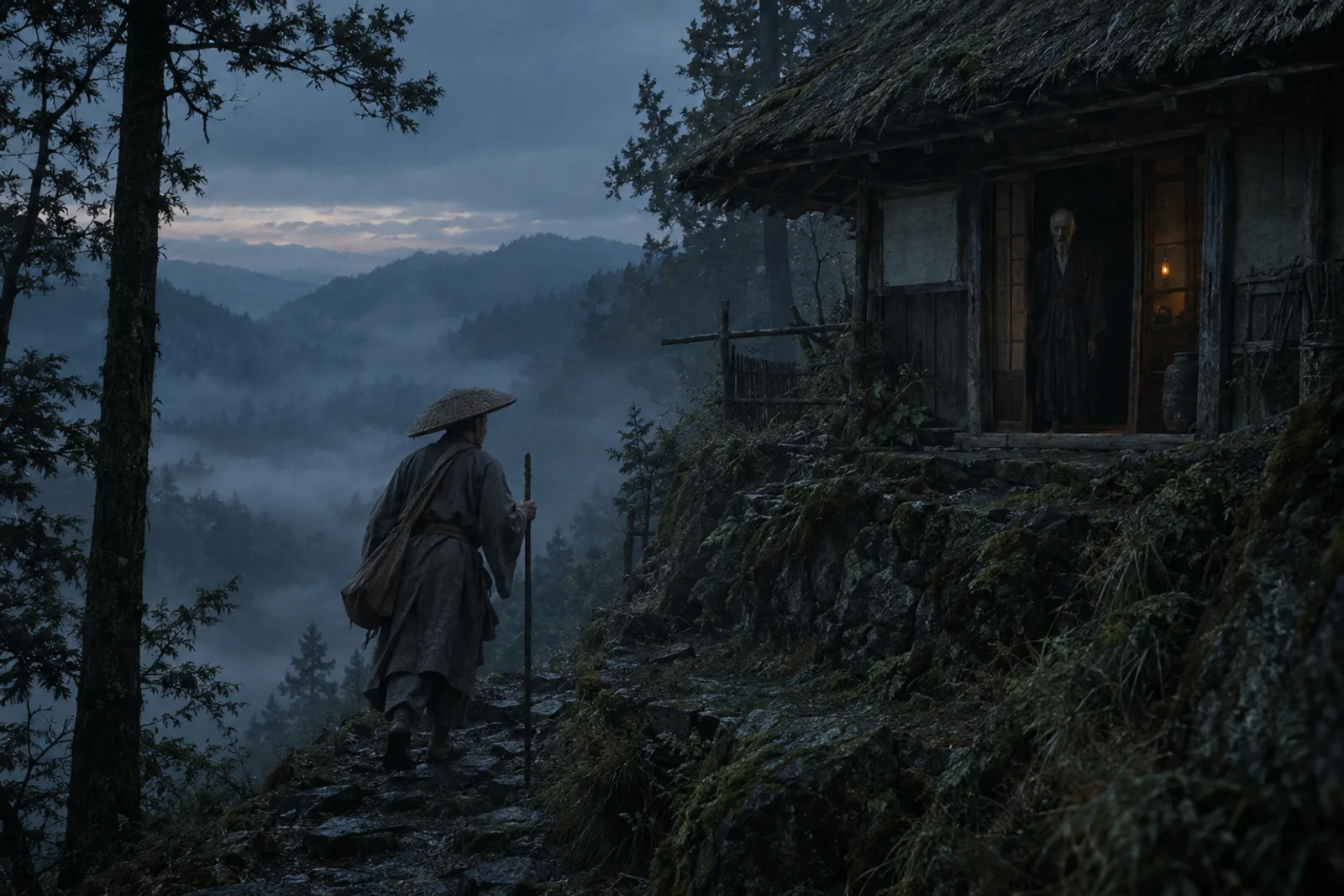
Musō Kokushi had been travelling alone through the mountains of Mino when he lost the road. He wandered until late in the day without finding anyone who could direct him, and by sunset he had begun to doubt that he would find shelter before dark.
From the valley he saw a small hermitage on a hill. The building looked neglected, but someone was living there. Musō climbed to it and asked the elderly priest inside for a place to sleep. The old man refused him, though he did tell him where to find a small settlement in the neighbouring valley.
Musō reached it before nightfall. There were fewer than a dozen farmhouses. At the home of the village headman he was received kindly, given food and shown to a separate room with bedding. He had noticed, when he arrived, that the main room was crowded with forty or fifty people, but no one explained why, and Musō was tired enough not to ask.
He went to sleep early. A little before midnight, loud weeping woke him from the next room. The screens opened and a young man entered carrying a lantern. Earlier that day, he explained, his father had died. When Musō arrived exhausted from the mountains, the family had chosen not to burden him with the news. Now everyone was leaving.
It was the custom of the settlement that no one remain there during the night after a death. The family had made the proper offerings and prayers. They would sleep in another village several miles away and return in the morning, leaving the dead man alone. The young man urged Musō to go with them because strange things were known to happen in a house where a corpse had been left overnight.
Musō was a priest. He offered instead to stay and perform the funeral service.
After the villagers had gone, he sat in the room with the dead man. Offerings had been arranged beside the body and a small Buddhist lamp was burning. Musō recited the service, completed the funeral rites and settled into meditation.
Hours passed. The village remained empty and silent.
At the deepest part of the night, a shape entered without making a sound. Musō saw it and found that he could neither move nor speak.
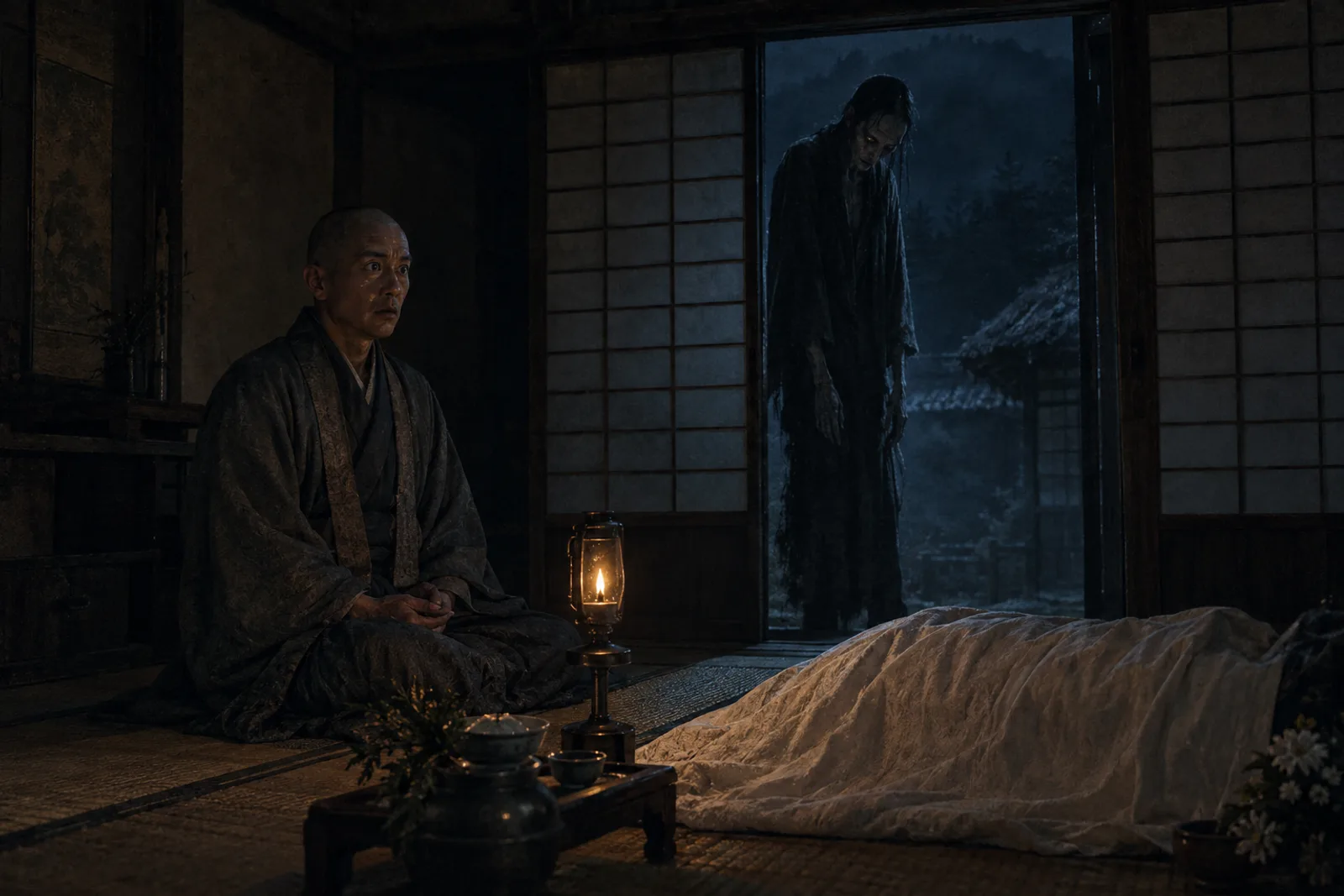
It went to the corpse, lifted the body and began at the head. Musō watched it eat the hair, flesh, bones and burial cloth until nothing of the dead man remained. When it had finished, it turned to the offerings and consumed those as well before leaving as quietly as it had entered.
The villagers returned in the morning. Musō told the young headman what he had witnessed, and the man did not appear surprised.
There was one thing Musō could not understand. A priest lived on the hill above them. Why had the family not asked him to perform the rites?
The young man did not know what he meant. There was no priest on that hill, he said, and there had not been one for years. When Musō described the hermitage where he had stopped the previous evening, the villagers told him there was no such building either.
Before continuing his journey, Musō returned to the hill to settle the matter for himself.
He found the hermitage without difficulty, and the old priest was there. This time he invited Musō inside. As soon as Musō entered, the man bowed repeatedly, overcome with shame. Musō assumed he regretted refusing him shelter, but the priest corrected him. He was ashamed because Musō had seen his true form during the night.
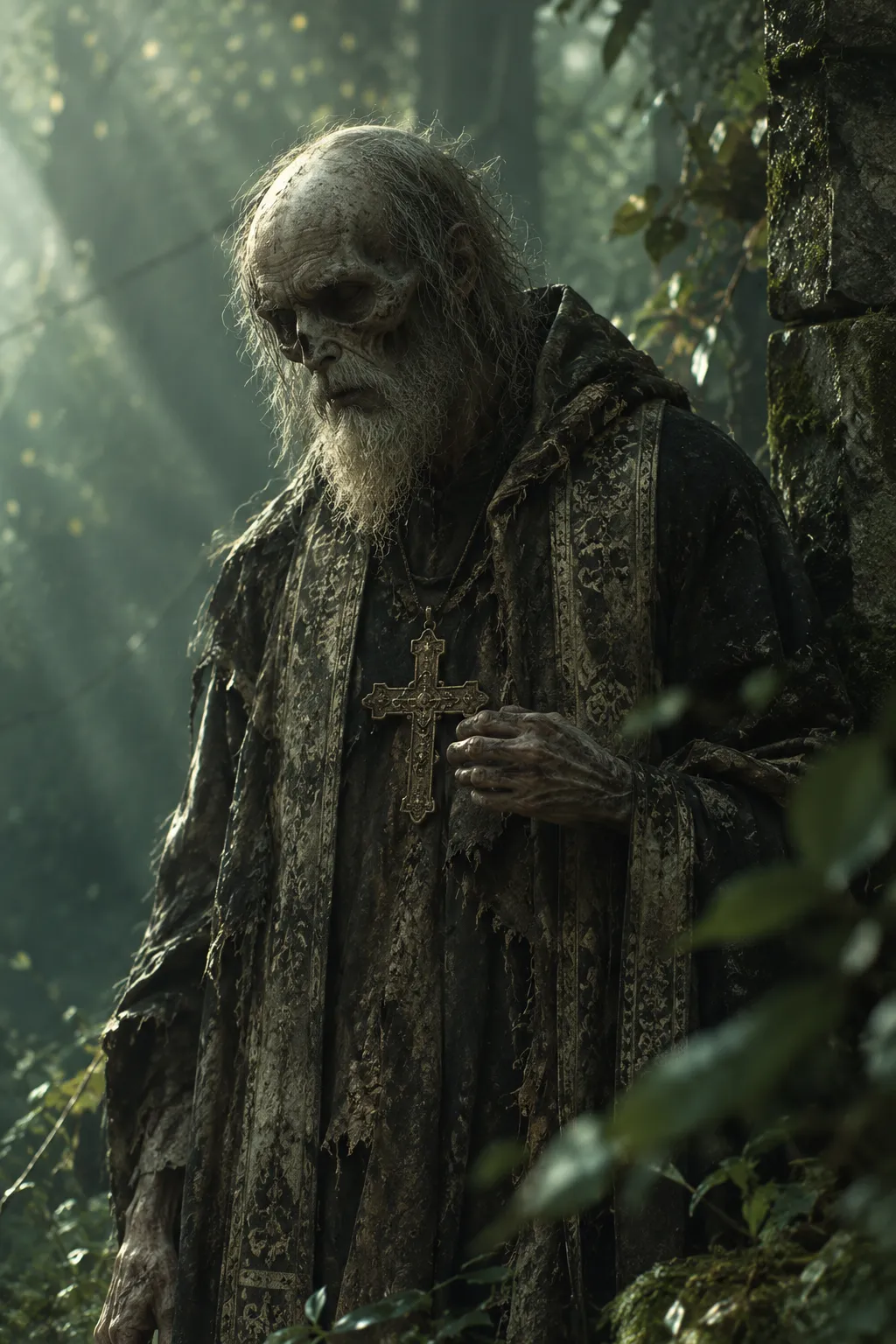
The thing Musō had watched eating the corpse was the old priest himself. Long ago, he explained, he had served as the only priest for many miles around. Families from the mountains brought their dead to him so he could perform the funeral rites. He had done what was required, but his attention had been on what the work brought him: food, clothing and payment.
After death, he had become a jikininki, a spirit condemned to eat the corpses of people who died in the district. He begged Musō to perform a Buddhist service for hungry spirits, hoping that the prayers might release him from that existence.
The old priest and the hermitage disappeared.
Musō found himself kneeling in high grass beside an old, moss-covered priest's tomb.
Should this become an Enigma video?
0 votes
Comments
Be kind. An editor checks every comment before it appears.
No comments yet. Be the first.