Bu Daryaa Cried in His Uncle's Voice
Content note: A sailor is lost at sea.
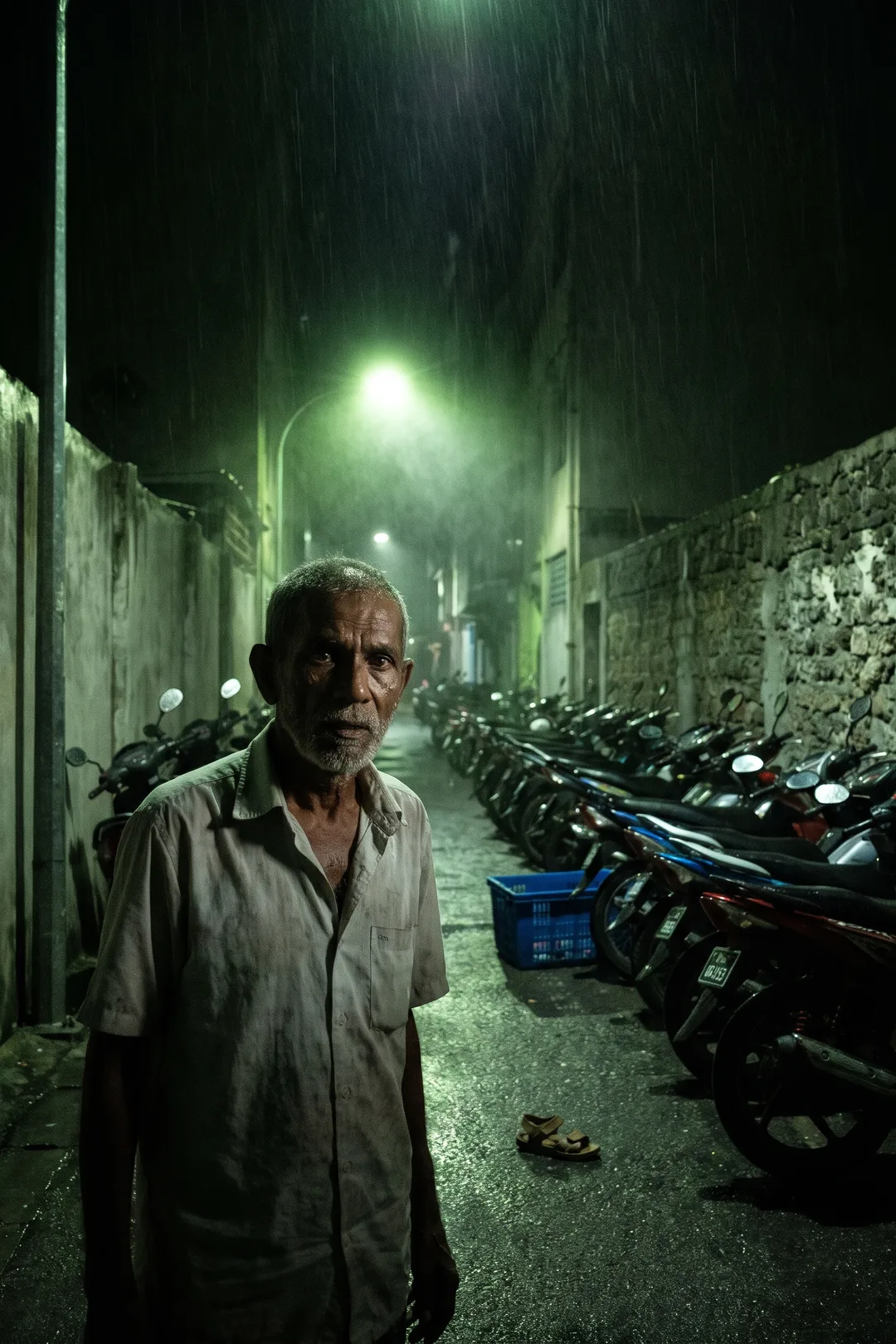
On the pearling boats out of Muharraq they called him Bu Daryaa, the Father of the Sea, and most men didn't like to say the name after dark. Khalifa said it anyway, over coffee, the night before Yousef's first watch. Khalifa was the nahham, the singer who chanted the crew through the hauling. He was the oldest man aboard, too old to dive, and his eyes were no good once the sun went down.
"He cries like a drowning man," Khalifa said. "My brother was a saib, like you. Younger than you, maybe. One night he heard a man drowning off the bow, and he turned round to fetch a rope, and he called out, hold on, I'm coming. In the morning he wasn't on the boat." He drank and put the cup down. "Never answer a voice crying for help from the sea at night. Keep your eyes on it and your mouth shut, and it can't take you. That's all I know. I don't know what it does to the men who aren't watching."
Yousef was in his first full season as saib to his uncle Salem, the one who stays on deck holding the rope and hauls his diver up. Salem was his father's younger brother and had kept Yousef and his mother in his own house since Yousef's father died. Salem, lying on his mat with his arm over his face, laughed. "Don't worry about me, I'll be right here asleep. You'll know it's me because I snore."
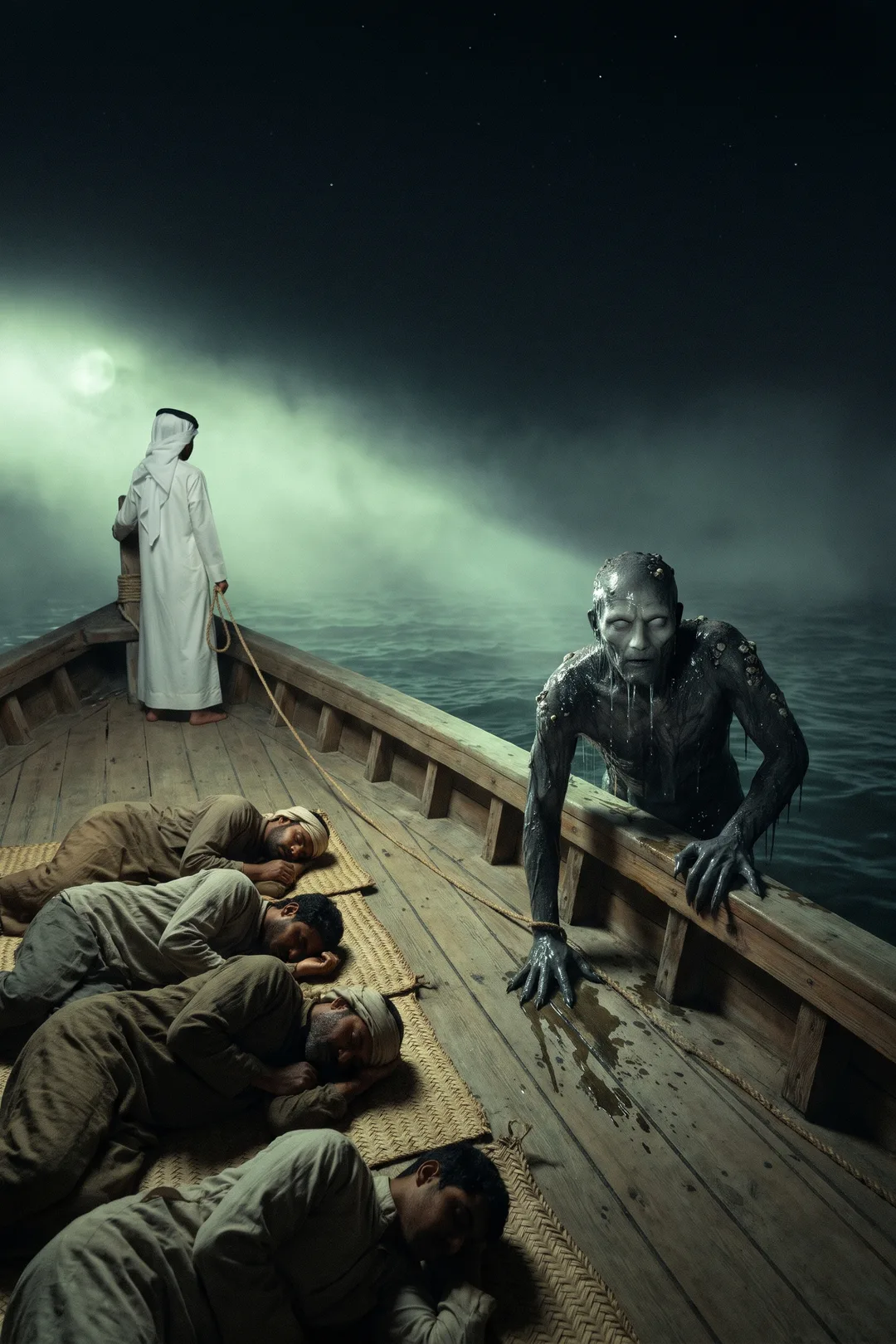
That was the summer of 1934, a bad year for pearls, and the boat was five weeks out on the hayr, the pearl banks off Bahrain, with no land in sight. The divers slept in two rows across the middle of the deck with their heads to the rails, and Salem had the starboard end of the forward row because he said he liked the air there. The nakhuda slept aft by the tiller. At anchor one man kept watch at the bow, a good ten paces forward of the nearest sleeper, and the man who should have shared Yousef's nights was lying under the awning with a fever, so the bow was Yousef's.
The first cry came a little after midnight, far out ahead of the bow. A man's voice, hoarse, the way a man sounds when he has swallowed water. Help me. I'm drowning. Help me. Yousef took hold of the rail with both hands and said Bismillah under his breath. He kept his eyes on the black water where the voice was and said nothing. It went on for an hour, then it stopped.
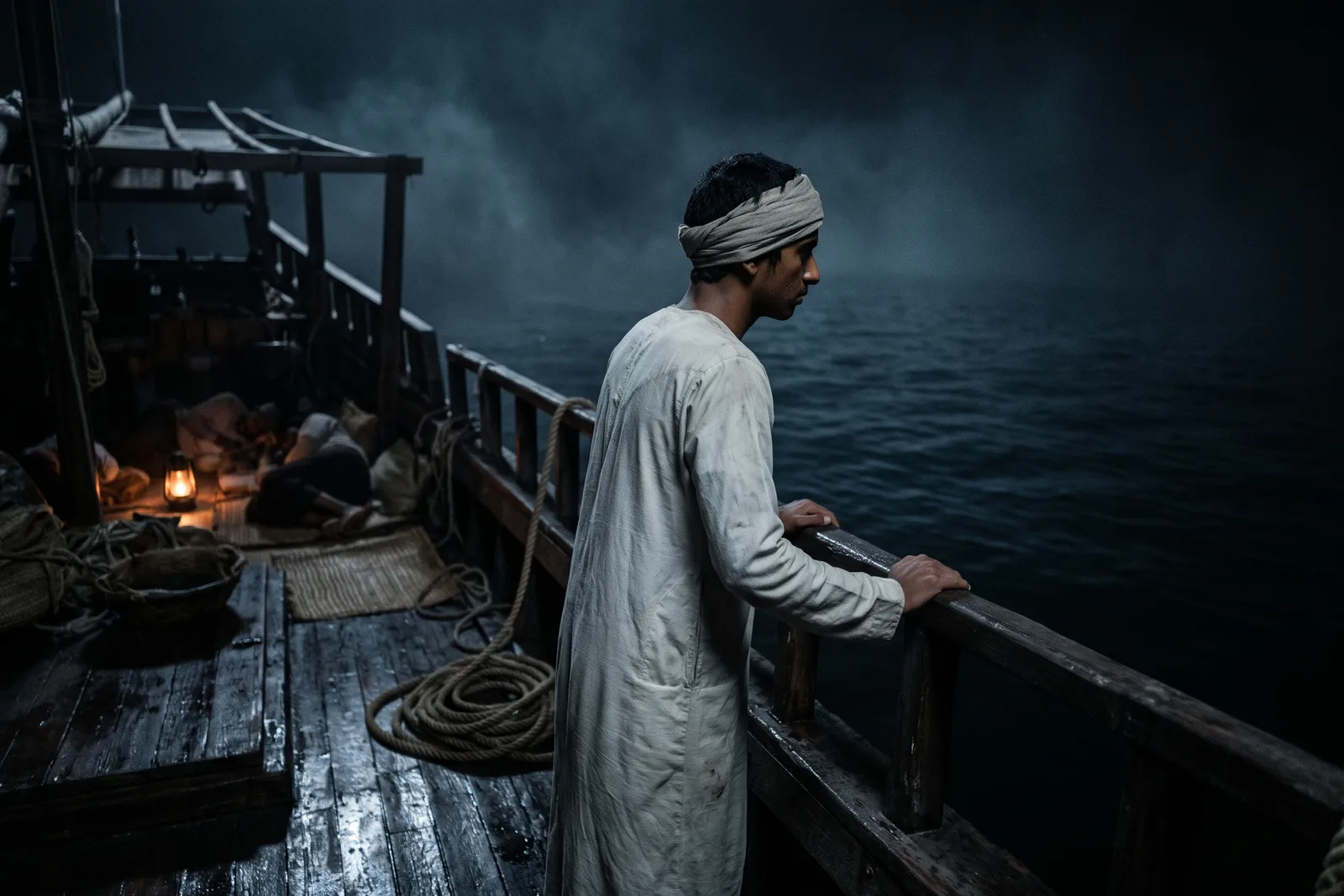
At dawn there were handprints on the planks just inside the starboard rail, a few paces behind where he had stood. Wet ones, the fingers long, as if someone had pulled himself up out of the sea. The nakhuda said one of the divers must have gone to the rail in the night and come back dripping, and told the tabbab, the ship's boy, to scrub them. Khalifa didn't say anything. He looked at Yousef.
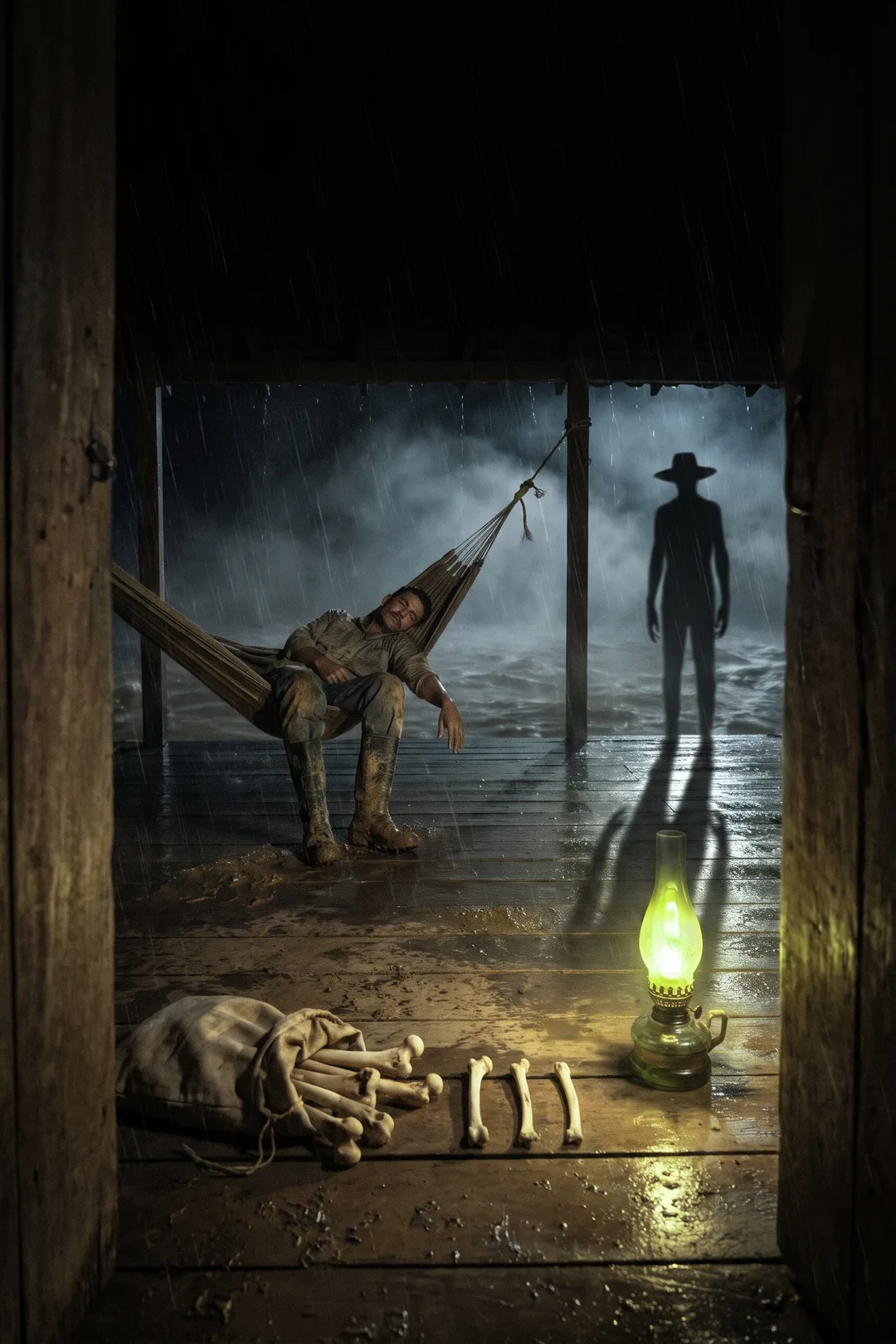
Then there was a day of work, the same as every day. Salem went down on the stone again and again, and each time he tugged the rope twice Yousef hauled him up hand over hand until his palms were raw. Salem complained about his ears and the price of rice and how much he still owed the nakhuda, and fell asleep before the evening meal was cleared.
The second night the voice was right under the bow. It said, Boy. Boy, please. It was loud enough now to fill his head, and he could hear it breathing between words. He held the rail and stared down at the water until his eyes stung, and he didn't answer. In the morning the handprints had come further aft along the starboard rail, halfway to the forward row.
He went to Salem while the others were at prayer and begged him to move to the middle of the row. Salem laughed at him. "The middle is for men with no debts." But when he saw Yousef's face he stopped laughing, and he let Yousef tie a haul rope round his wrist and run it forward along the deck to the bow. "If anything touches you, pull twice," Yousef said, "like coming up." Khalifa recited Ayat al-Kursi, the Throne Verse, over the forward row before the men lay down. Yousef went aft to the nakhuda and asked for a second man on watch.
"The divers need their sleep," the nakhuda said. "Who do you want? Khalifa? He can't see past the bow at night. I've two men down with fever and one week left to fill the baskets. Boys your age have kept the bow on my boats since before you were born. Go and keep your watch." Khalifa had already offered to sit up with him, and the nakhuda had told him the crew needed his voice for the hauling more than the boy needed company.
The third night it said his name. Yousef. Yousef. It said it the way his mother said it, at the door, when he was late. He shook so hard the rail creaked under his hands, and still he kept his face to the water and his mouth shut. At dawn the prints stopped an arm's length from Salem's mat. Salem looked at them a long time and then went down on the stone with the rest, because the season was short and the debt wasn't.
On the fourth night Yousef retied the knot at Salem's wrist and pulled it tight. Salem was already snoring. Yousef went forward, wrapped the end of the rope twice round his hand beside the stem post, faced the sea, where the voice always started, and waited.
It came from just below the bow, and it was Salem's voice, the exact voice that came up the rope to him every day from the water, the one that shouted for him to pull. Yousef, pull. I'm caught, my foot's caught, pull me up. Yousef, pull.
Yousef clenched his jaw until his teeth ached. He listened behind him for the snoring and couldn't find it under the voice, which was so close now it seemed to come up through the planks into his feet. He wanted to look round at the mat. He kept his eyes where Khalifa had told him to keep them, on the water, where the voice was.
The voice begged. It coughed and choked and came back. It said, Yousef, it's me, why won't you pull. It said his father's name and asked him what his father would say. Toward the middle of the night it started to cry, the way grown men cry when they have no strength left to be ashamed, and Yousef cried with it, standing there, saying nothing.
Then the rope round his hand jerked twice. It came from behind him, from the mat, the signal Salem gave from the bottom when he wanted to come up, the one Yousef had told him to give if anything touched him. Yousef's head started to come round. In the same breath the voice under the bow said, Pull, Yousef, that's me, pull.
He held still with his chin half turned. The voice was in front of him. He could hear it down there by the stem post, choking, and Khalifa had said that if he kept his eyes on it and his mouth shut, it couldn't take him. So the tug was Salem rolling over in his sleep, or Salem dreaming, or Salem awake and frightened and pulling because Yousef had told him to. He didn't know which. If he turned to look, the water would be behind him. If he pulled, he would be doing what the voice was asking him to do. He shouted Salem's name back over his shoulder without turning his head, then the nakhuda's, as loud as he could. Nobody answered, nobody stirred, and the voice under the bow only rose to cover his, so he couldn't tell if his own had carried past the stem post. Khalifa's brother had turned round for a rope. The rope jerked twice more, harder, and burned across his palm. Yousef put his face back to the water. He didn't pull, and he didn't let go. The rope dragged hard back along the deck, though under the voice he couldn't hear a sound from behind him, and then it went slack across his palm and lay still.
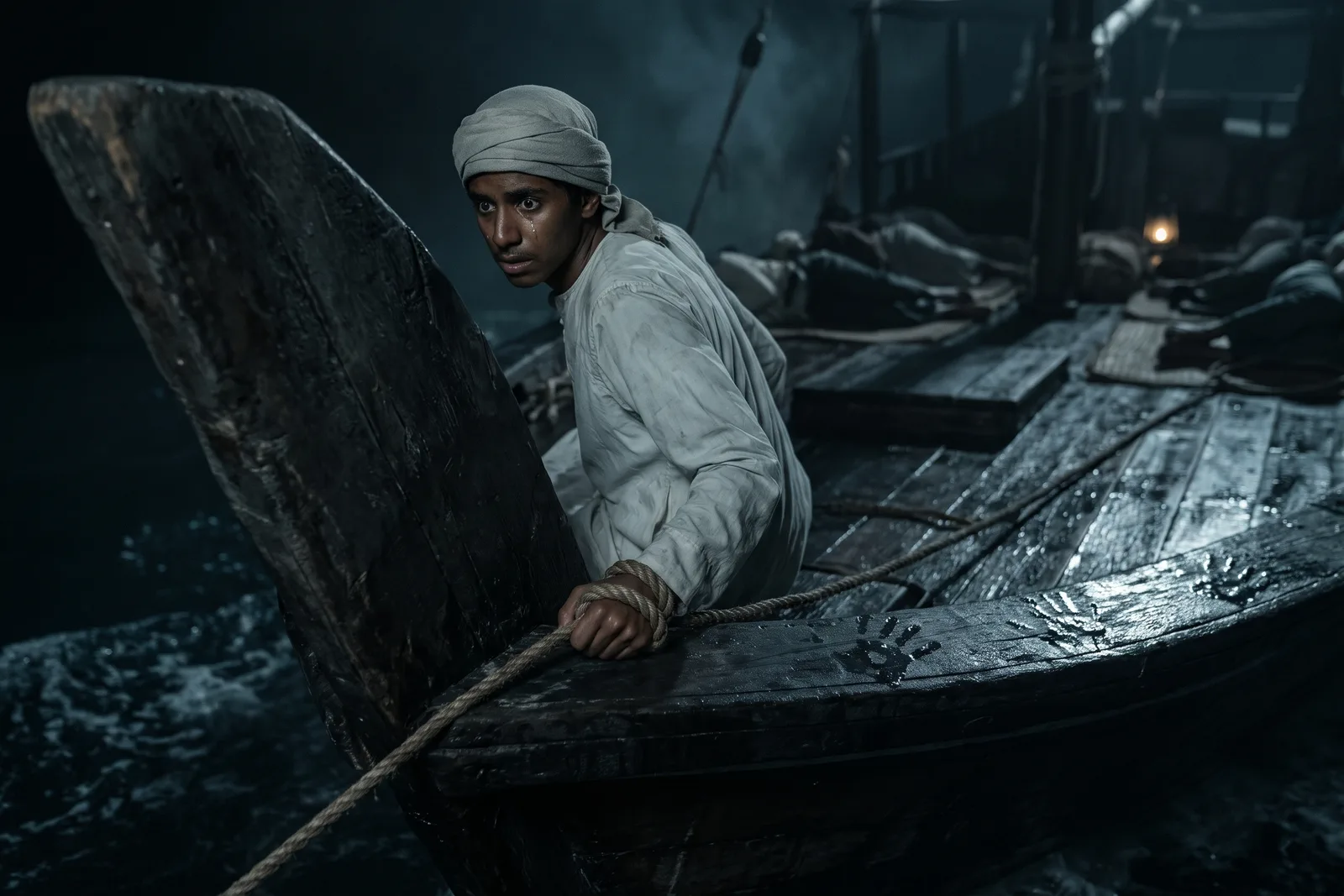
It called him until the sky went grey. Then it stopped in the middle of a word, and Yousef let go of the rail and turned around.
Salem's mat was empty and soaked through. The rope ran back along the deck to it, and the knotted loop lay open at the end on the wet mat, dragged off his wrist. Wet handprints came from the starboard rail all the way to the mat, and a long smeared track went back the other way and over the side. The diver who had slept beside Salem sat up, found his arm wet, and started shouting for the nakhuda. Later he said he had woken once in the night to cold water on him and a weight shifting beside him, and had thought it was spray, and gone back to sleep. Five weeks into a season the divers slept like drowned men, and nobody else had woken at all.
The men searched until noon. They dived for Salem and found nothing on the bottom but shell. Khalifa sat on the deck with his hands in his lap and did not sing that day, or the next, but that evening he recited the Throne Verse over the forward row again, and nobody lay down until he had finished. The nakhuda drew a line under Salem's name in his book. When the boat came into Muharraq, Yousef's mother went in to Salem's wife, and Yousef waited out in the lane and could not make himself follow her.
The voice had kept his face to the water every night while the prints came up the starboard rail behind him. Khalifa's rule had only ever promised that it couldn't take the one who kept it. The next season he went out on another boat, because the house had lost its diver, and for many seasons after that. He took the night watch whenever it was offered. He kept the boat's axe and saw at his feet, because the old men said Bu Daryaa was afraid of them, and he stood at the bow with his back to the sea and his face to the sleeping men. Every so often he counted the mats, row by row, and looked along the rail behind them. When the voice started out on the water, he let it call.
Should this become an Enigma video?
0 votes
Comments
Be kind. An editor checks every comment before it appears.
No comments yet. Be the first.